


Australia – Vietnam
Following the Supply Chain
From Australian farms and fisheries to trusted product data in Vietnam.
It started in the field
A supply chain is more than a sequence of transactions. It is a physical system — farms, fisheries, packing facilities, warehouses, logistics, people, processes, labels and products moving across borders. To build meaningful traceability, we first needed to understand how that system actually works.
That is where the Australia–Vietnam project began.
The programme brought together Australian producers and exporters, Vietnamese importers and retailers, researchers from leading Australian universities, and TraceVerified to demonstrate traceability across real export supply chains.
The pilot covered three product pathways:
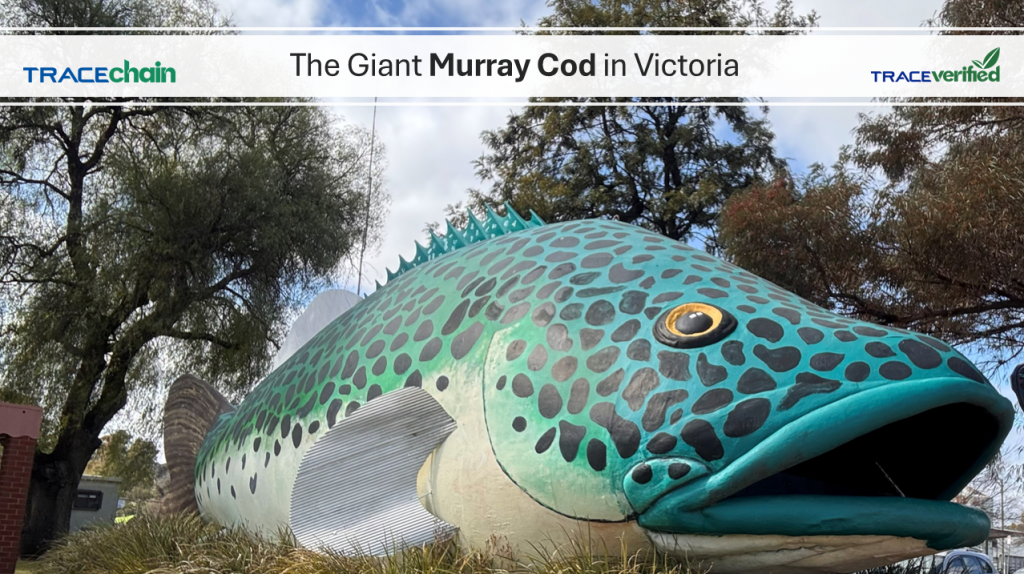
- Murray Cod ⏩Aquna ⏩ Annam Gourmet
- Cherries ⏩Cherry Hill Orchards ⏩ Klever Fruits
- Nectarines ⏩Montague Farms ⏩ Klever Fruits
01 — First, we went to the source
Seafood first. Then horticulture.
The first fieldwork focused on the Murray Cod supply chain, following the movement of a premium Australian seafood product toward the Vietnamese market. The second field trip took us into Australia’s horticultural supply chains.
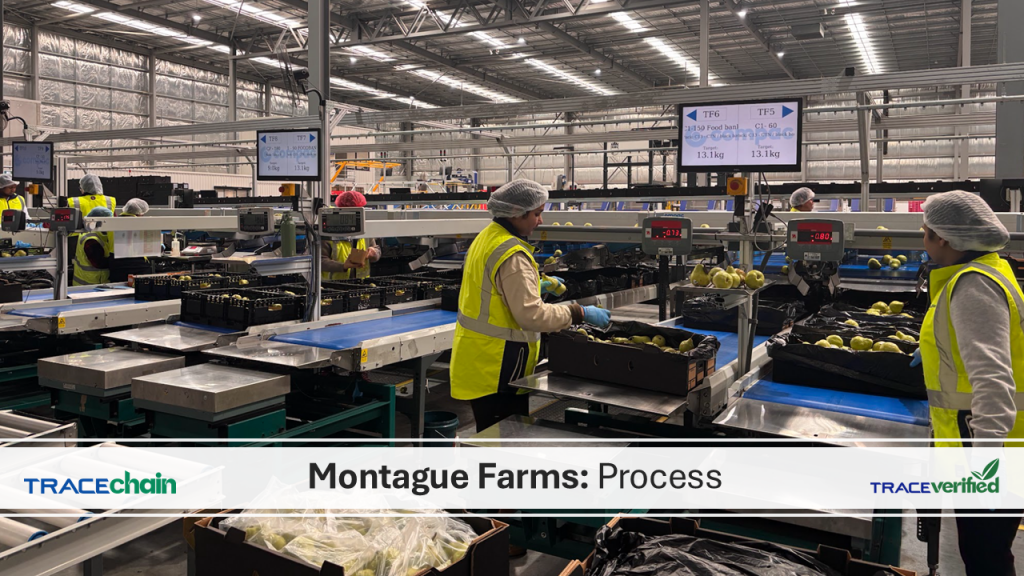
In September 2025, TraceVerified joined the research team on a field trip across Victoria, visiting Montague Farms, Sharp Fruit, Cutri Farms / Premier Fresh and Cherry Hill Orchards. The visits covered farms, products, processing and packing operations, packaging, labelling, software and discussions with operational teams.
We were not there simply to take photographs.
- We were there to understand the system.
- Where does the product begin?
- Where does it change?
- Where does information enter the process?
- What is already being recorded?
- What needs to be connected?
02 — Inside the operation
Traceability starts with operational reality.
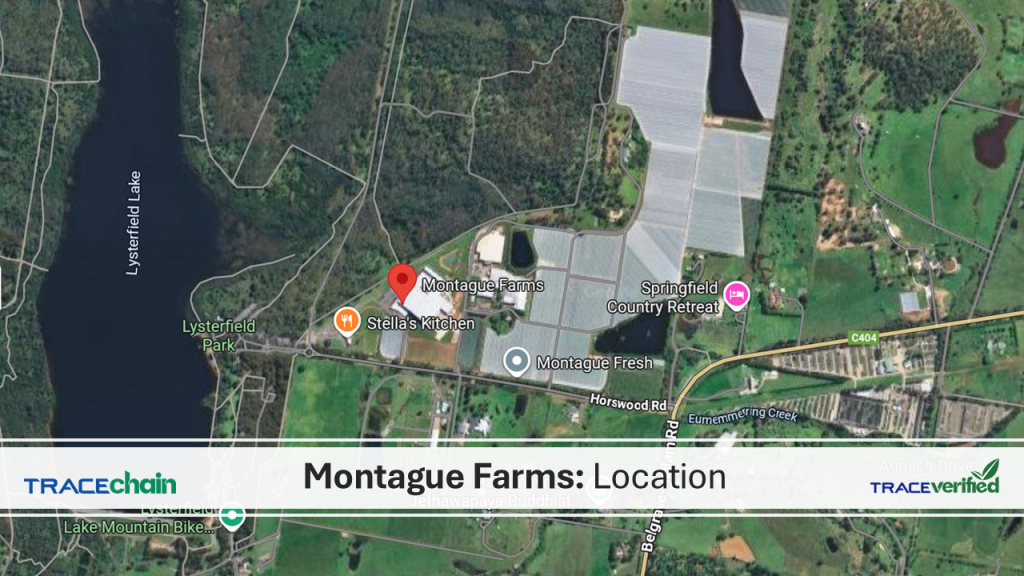
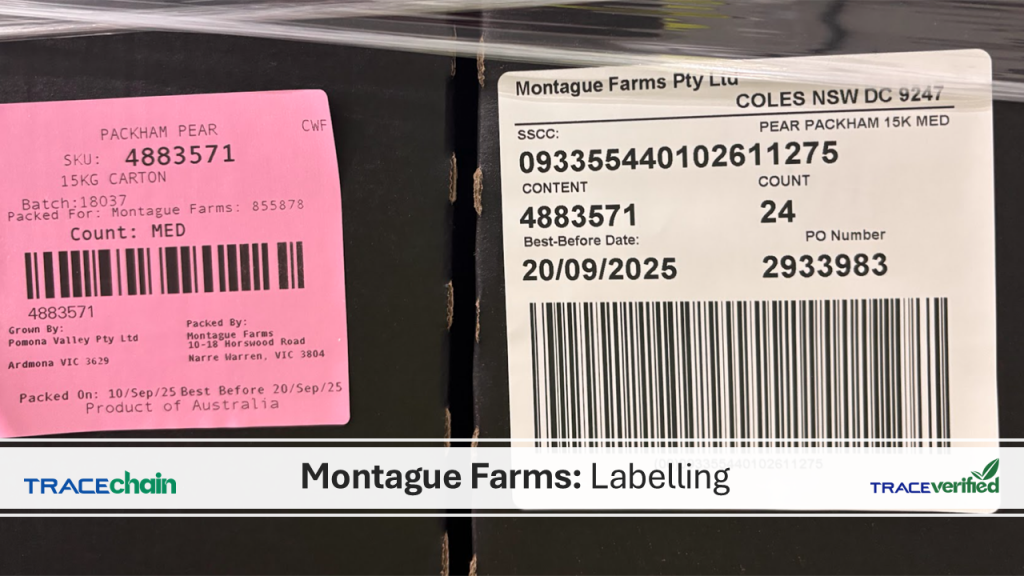
At Montague Farms, we saw the transition from farm production to a highly organised packing environment. Products moved through sorting and packing lines, into cartons and pallets, supported by existing identification and labelling systems.
- At Sharp Fruit, the fieldwork moved further into the packing and logistics environment — from product and packaging to batch identification and warehouse operations.
- At Cutri Farms, the team examined a different operational environment, including automated packing systems, product presentation and batch-level labelling.
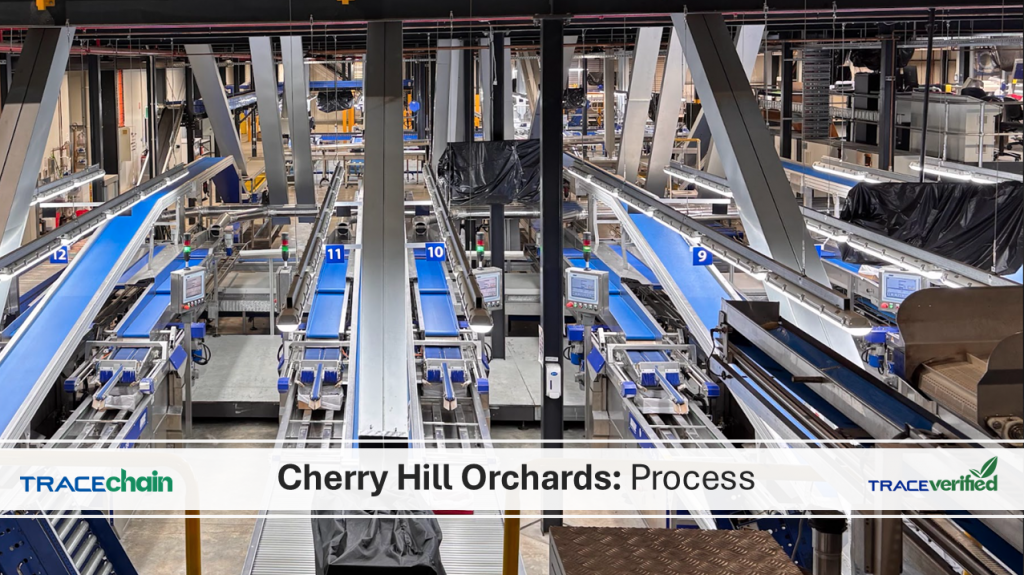
- And at Cherry Hill Orchards, we followed the journey of cherries through a sophisticated packing operation, looking not only at the product and packaging, but also at the software supporting the operation.
Across the sites, one thing became clear: The supply chain already generates data. The challenge is connecting it into a trusted chain of evidence.
The supply chain already generates data. The challenge is connecting it into a trusted chain of evidence.
03 — From physical flow to data flow
We mapped the supply chain before configuring the technology.
The project translated real operational processes into a traceability framework. For each supply chain, the team identified:
- Traceable Resource Units: What exactly is being traced?
- Critical Tracking Events: Where does custody or a significant transformation occur?
Key Data Elements: What information needs to be captured?
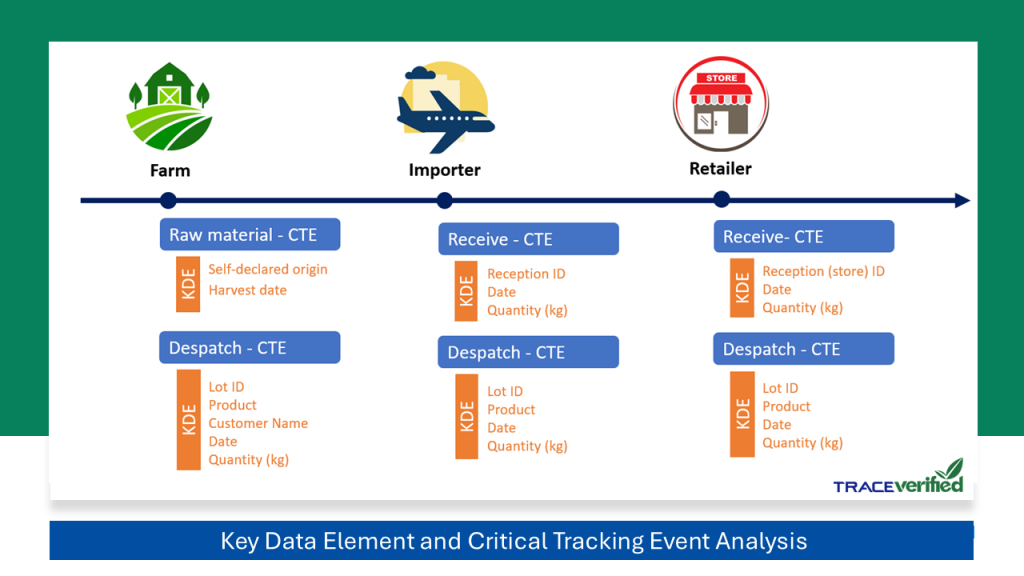
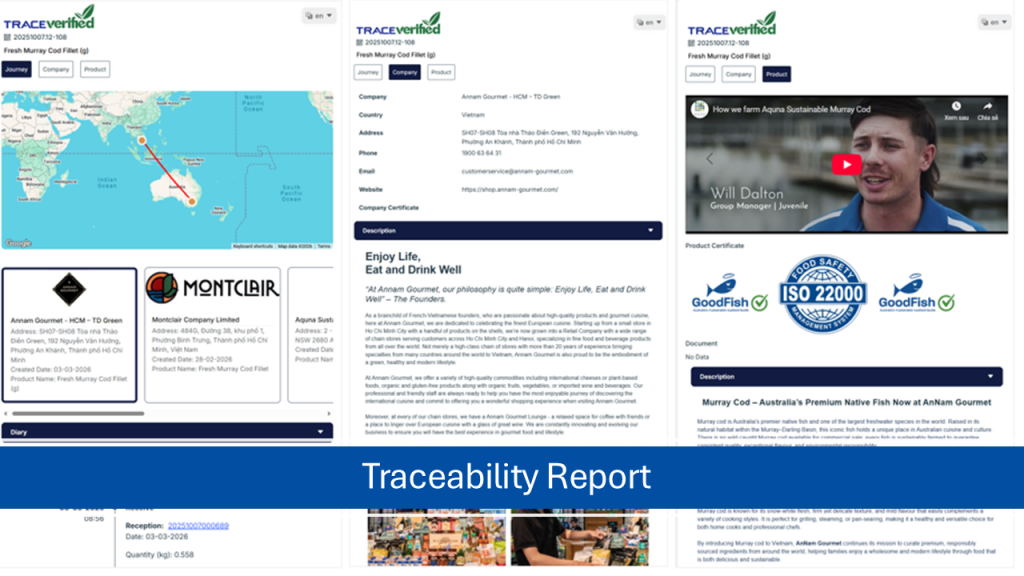
The TraceVerified platform was then configured around these processes. The implementation used batch-specific parent QR codes for bulk products and child QR codes for consumer-facing retail formats. This allowed traceability to continue when products moved from bulk cartons or whole fish into smaller retail units.
This was particularly important for the two different supply chains.
For horticulture: Bulk carton → Importer → Retail → Retail punnet
For seafood: Whole Murray Cod → Processing → Fillet → Retail pouch
The physical product changed. The traceability chain had to remain connected.
04 — Murray Cod: tracing a product through transformation
From whole fish to retail fillet
The seafood pilot demonstrated how traceability can continue through a product transformation. Aquna Sustainable Murray Cod was supplied as whole fish from Australia.
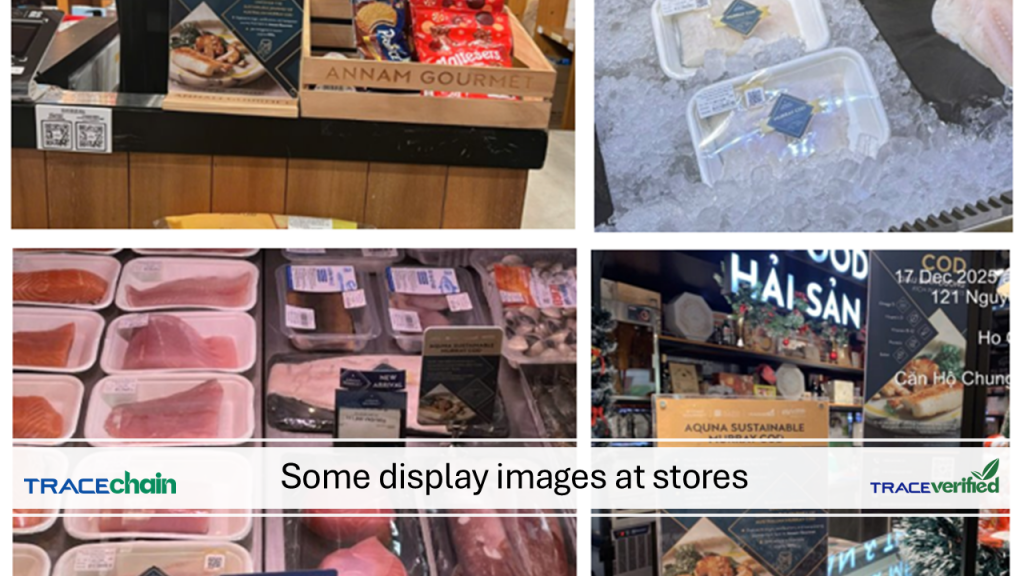
After arriving in Vietnam, the fish was processed at Mont Clair, the central kitchen operated by Annam Gourmet, and transformed into fillets for retail sale through Annam Gourmet Market.
The traceability model therefore needed to connect the original whole fish with the resulting consumer-facing retail product. This is where traceability becomes more than “Where was this product produced?”
It becomes: How did this product become the product I am buying today?
05 — Horticulture: tracing the fruit
From orchard to retail
For cherries and nectarines, the supply chain followed a different path. Products were exported in bulk cartons from Australia, received by the Vietnamese importer and then transferred into smaller retail presentations. Batch-level QR codes carried provenance and shipment information through these stages. The project therefore connected the physical journey of the fruit with digital records:
Australian origin ⏩Harvest & packing ⏩ Export ⏩ Vietnamese import ⏩ Retail ⏩ Consumer-facing information
06 — The people behind the data
Technology only works when it fits the people and the process.
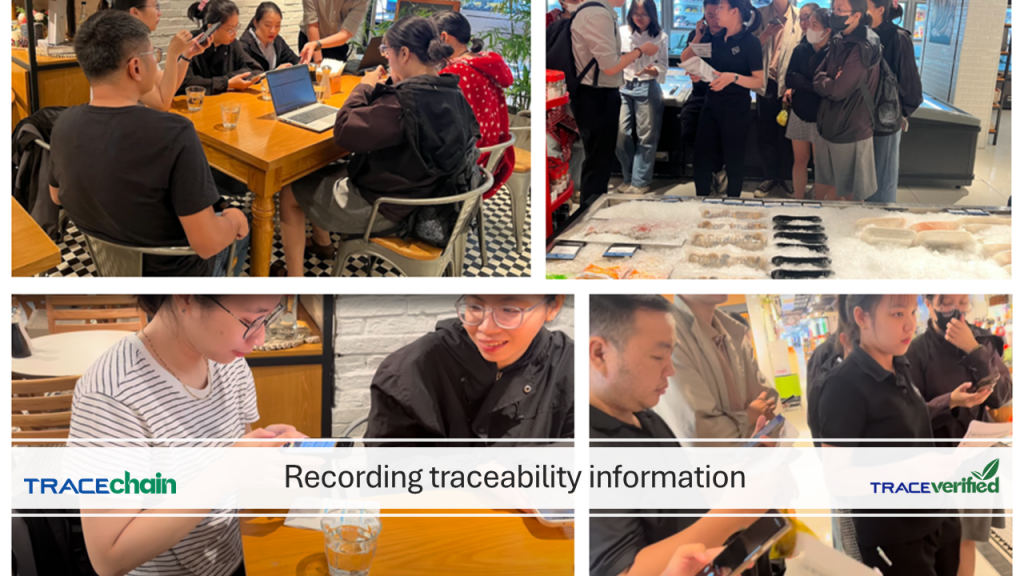
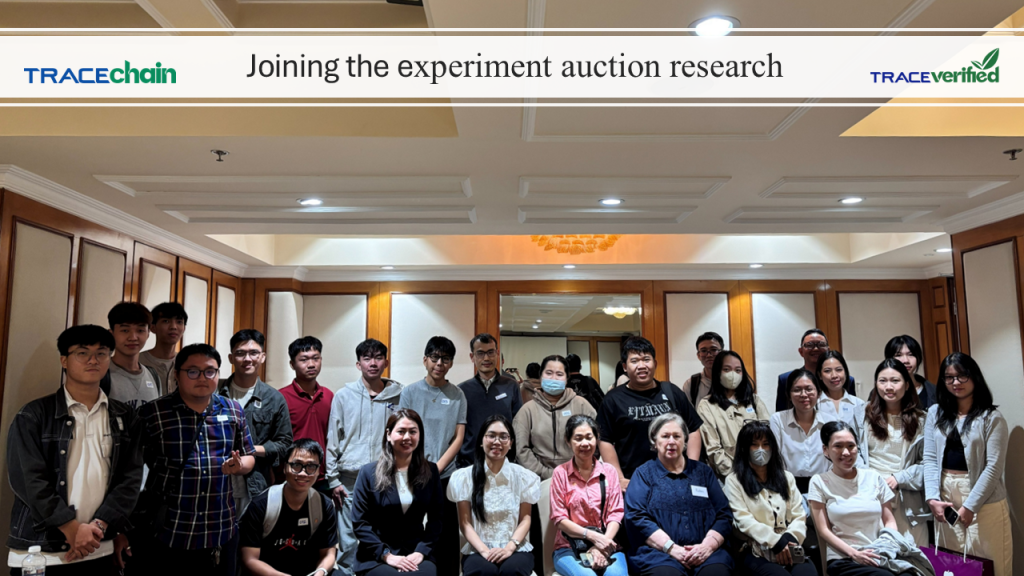
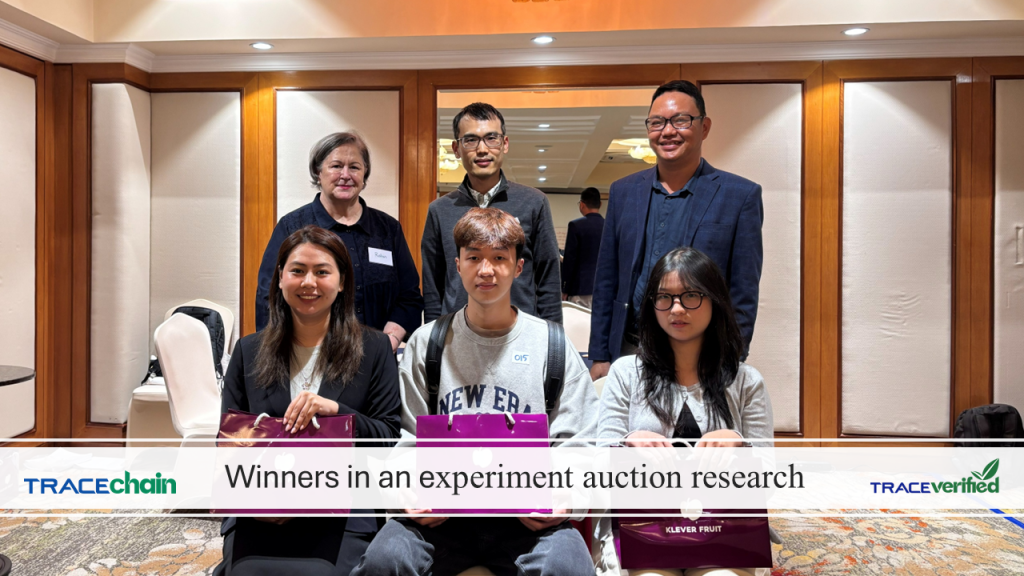
Traceability was implemented across organisations on both sides of the supply chain. TraceVerified worked directly with Australian producers and exporters, Vietnamese importers and retailers, configuring user access, supporting implementation and training teams.
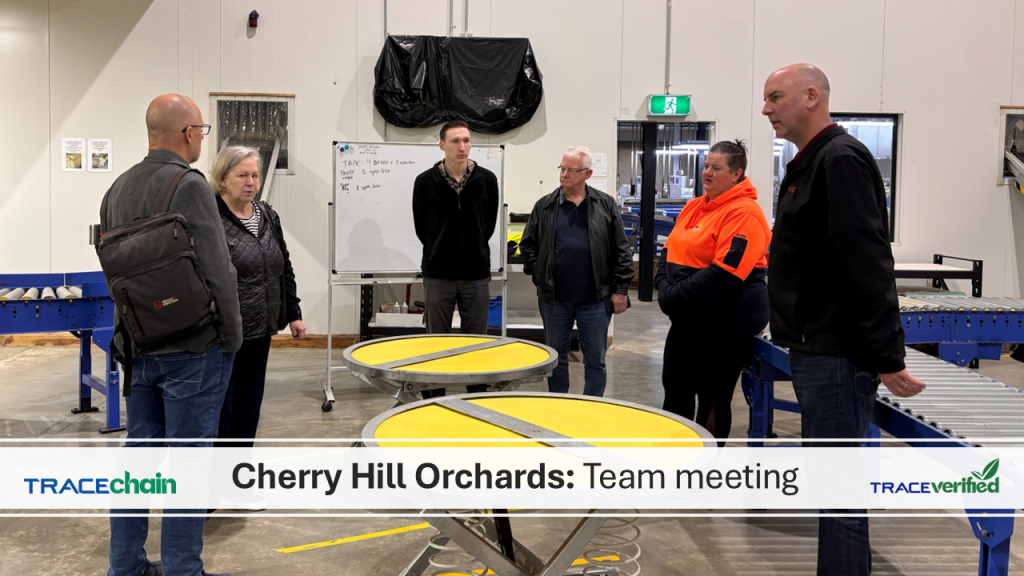
Training covered partners including Aquna, Cherry Hill Orchards, Montague Farms, Klever Fruits and Annam Gourmet. The field photographs tell an important part of this story. The technology is visible. But so are the people discussing the process, standing on the packing floor, examining labels and working together to understand how information moves through the operation.
That is where digital traceability becomes operational traceability.
07 — From Australia to Vietnam
The project connected Australian producers with established Vietnamese market channels.
- Aquna Murray Cod → Annam Gourmet
- Cherry Hill Cherries → Klever Fruits
- Montague Nectarines → Klever Fruits
The pilot was designed to demonstrate traceability in actual Australian seafood and horticultural export pathways supplying Vietnam — not in an isolated technology environment. That distinction matters.
Because international traceability has to work across:
- Different organisations
- Different systems
- Different responsibilities
- Different countries
- and ultimately: Different points of trust.
08 — What the project demonstrated
The pilot demonstrated that traceability data can be captured and shared across multiple organisations and supply-chain stages. It also showed something equally important: Technology readiness is only one part of implementation.
Clear roles, operational procedures, partner coordination, training and follow-up are essential to creating a reliable traceability system. This is one of the reasons TraceVerified approaches traceability from the supply chain first, technology second.
We do not begin by asking:
- What software should we deploy?
- We begin by asking:
- How does the supply chain actually work?
- Then we build the data architecture around it.
09 — Beyond one project
From traceability implementation to supply-chain intelligence
The Australia–Vietnam project brought together:
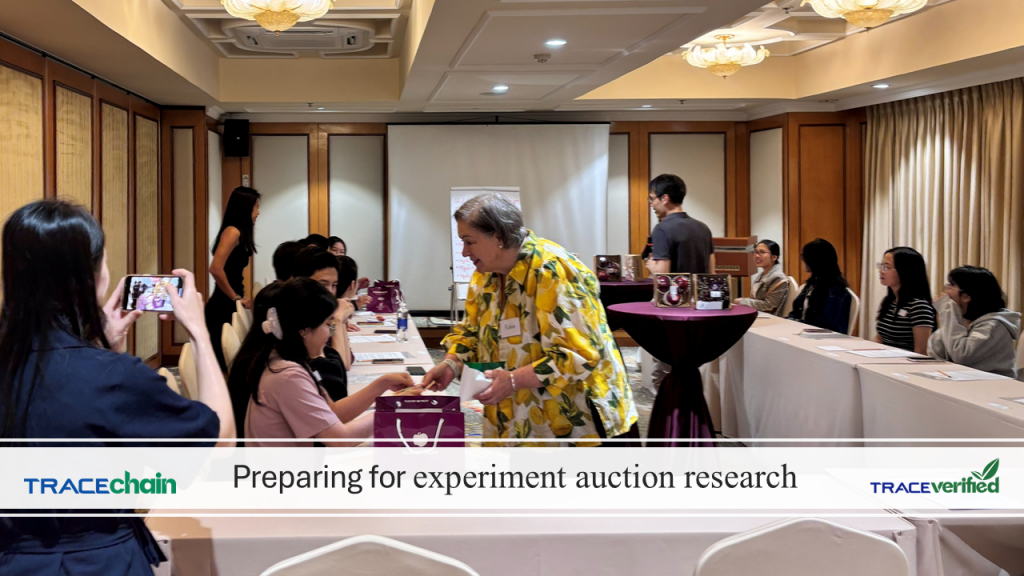
Fieldwork⏩ Process Mapping ⏩ Traceability Design ⏩ Data Collection ⏩ Operational Implementation ⏩ Reporting ⏩ Market & Consumer Research
The result was more than a digital record of product origin. It created a structured data layer that could support a broader understanding of how products move through international supply chains.
And this is where our work is heading next.
10 — FROM AUSTRALIA TO THE WORLD
From Traceability to TraceChain
The field experience shaped the infrastructure.
TraceVerified has spent years working inside real supply chains — not only designing traceability systems, but understanding the physical processes, organisations and data behind them.
That experience is now being translated into TraceChain — Supply Chain Data Infrastructure.
TraceChain is designed to connect data across: Products · Materials · Processes · Organisations · Events · Evidence
so that supply-chain information can move beyond isolated records and become a trusted data infrastructure.
Traceability is only the beginning.
Explore implementation approaches, CTE/KDE models, traceability data, and lessons learned from real-world projects.